Instead of Group Policy, it's managed the way smartphones and tablets are, using MDM tools and cloud identities. Our mission with Windows is to build a platform that inspires creativity in each of us. With Windows, not only do we want to build a platform that inspires creativity in each of us – we also want customers to have choice around the best Windows for their needs. Back in May, we introduced a new set of educational products and services, including the introduction of Windows 10 S. Windows 10 S is the next step of our Windows journey by offering customers a familiar Windows 10 experience, streamlined for security and performance.

It isn't enough to have great new devices, apps, and games — you also have to know how to use them. Here at The Verge, we offer step-by-step how-tos for experienced and new users who are working with online, macOS, Windows, Chrome OS, iOS, and Android apps, services, phones, laptops, and other tools. From simple instructions on how to install and use new devices, to little-known strategies on how to take advantage of hidden features and the best methods for adding power or storage, we've got your technological back.

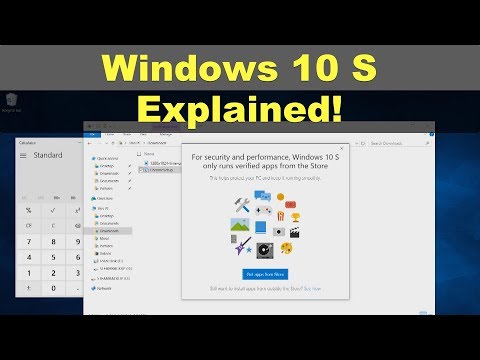
With Windows 10 S, Microsoft is trying to create a harmonious ecosystem of apps and services targeted mostly for education. With that in mind, Microsoft pulled out a couple of features, added optimisations where it matters (battery life and performance, hell yes!), and made it all work together. The big idea with Windows 10 S is that it brings higher performance and better battery life to any PC. The tradeoff, however, is that it only lets you install apps from the built-in Microsoft Store. That means no Google Chrome, Steam, or any other app you'd grab from the internet.

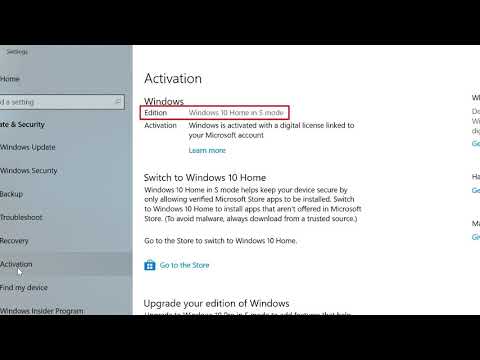
It was intended to power low-cost, high-security laptops for education, as a maneuver to chip away at the dominance of Google's Chromebooks in American classrooms. By exclusively using Microsoft-verified apps in the Windows Store and ensuring that you browse safely with Microsoft Edge, Windows 10 S keeps devices running fast and secure every day of the school year. Windows 10 in S mode is a specific configuration of Windows 10 Pro designed for added security and performance.

Windows 10 in S mode uses Microsoft Edge as its browser and uses apps from the Windows Store only to enhance performance and security. Certain default settings, features, and apps cannot be changed. Some accessories and apps compatible with Windows 10 might not work , and performance might vary, even if you switch to Windows 10 Pro configuration . For more information, go to Microsoft webpage Windows 10 in S Mode FAQ .
Earlier Windows 10 features still deserve attention, including Clipboard History , a powerful screenshot tool, Timeline, Focus Assist, Game mode, Dark mode, Nearby Sharing, parental controls, and an updated News app. The Your Phone app syncs photos, SMS messages, and even voice calls fromAndroid phones and LTE-equipped laptops. These upgrades join Windows Hello face login and other Windows exclusives. Even with all its forward-looking features, the OS remains familiar to longtime Windows users.
For intrigued Apple users, I've compiled a list of15 Windows tips for Mac users. This locked-down version of Windows found on low-end education PCs is meant to be secure, and optimized, for better performance and longer battery life. A lot of reviewers, though, immediately switch their PCs and review units out of S-mode for free, complaining about the lack of software, and the incompatibility with traditional non-Microsoft verified Win32 apps.
Clearly, Microsoft is trying to compete with Chromebooks here. When you view these Windows 10 S devices as school-friendly machines, they make a lot of sense. Having a light version of Windows that only lets safe and approved apps installed thanks to the Windows Store is perfect for student use.
Whether these will take some of the market share from Chromebooks, though, remains in the air. The education market is the first focus for the Windows 10 S push. To some extent, "Windows 10 in S mode," as Microsoft frequently refers to it to emphasize that this is the full version of Windows underneath, is a reaction to the danger posed by competition from Chromebooks. A key point is that devices you're relying on in a classroom need a battery that lasts all day, because they have to work in the last lesson of the day as well as the first.

Another is that schools are usually short on IT resources, so they're looking for simpler management options that rely on the cloud. The "S" in Windows 10 S doesn't stand for anything, although Microsoft throws around words such as safe, secure, streamlined, superior performance, simple and student to explain it. Standardized and super locked down might be closer to the mark.

This is a full version of Windows with some limitations, one that's designed to start up quickly, have long battery life, and keep working properly month after month after month, without resets or support calls. Mac users have had one for several years, and it offers the advantages of automatic updating and a single source for finding programs you need. Acceptance to the Windows Store also means an app has been vetted by Microsoft for security.
You can even install apps to external memory—something tablet users can appreciate. What's more, since you can't install rogue Win32 programs from outside the Store, battery life should be slightly better too. Windows 10 in S mode is designed for security and performance, exclusively running apps from the Microsoft Store. If you want to install an app that isn't available in the Microsoft Store, you'll need to switch out of S mode. … If you make the switch, you won't be able to go back to Windows 10 in S mode. While Windows 10 in S Mode might not be the powerhouse of productivity that some heavy-handed users may be accustomed to, it certainly does shine for others.
In the world of education, Windows 10 in S Mode provides students with the tools they need to work and collaborate safely without taking a security risk. For older users who might not be up to date on the latest in tech and cybersecurity, Windows 10 in S Mode provides a way for them to still stay connected on a fast device that doesn't put their data at risk. Finally, for the basic email-checking, Facebook-scrolling, YouTube-watching internet user, Windows 10 in S Mode helps keep your device running at its peak performance without sacrificing access to your favorite apps. Windows 10 in S Mode has one significant secret weapon – its speed. If you have a device that comes with the Windows 10 S mode OS, then you would have noticed that installing apps is a rather limited affair. Unless the application you want to use comes from the Microsoft store, then you're out of luck.

Because of this, a lot of people choose to change their version to avoid this problem. Windows 10 S is Microsoft's newest version of its Windows operating system. It's designed for students, and it's meant to take on Google's Chromebook and Chrome OS ecosystem. What that means in practical terms is that 10 S is a more locked-down version of Windows, with users limited to only being able to install Windows Store applications. The flip side is that by requiring applications to only come from the Windows Store, Microsoft can do a whole lot more to ensure that Windows 10 S is a fast, secure operating system.

Windows 10 S devices aren't just for schools; some devices are only sold to educational institutions. But Microsoft has just announced new Windows 10 S PCs aimed at business users, at similar prices. For example, Windows 10 S ISO is available on the Microsoft Developer Network so schools can put it on their existing hardware and IT departments can test it. But if you're a consumer, you can't buy Windows 10 S to upgrade your existing PC; you have to get it on a new PC. Not everyone will realize it's software they've installed that slows Windows down, and even if they do it can be tricky to remove cleanly. Windows 10 S has a number of applications you can also find in Windows 10 Pro.

Is Windows 10 Or 10S Better Use BitLocker to protect your files, update the computers within your network via the cloud with Microsoft Update for Business, and control your settings from one laptop. Remote Desktop is very useful to work on location, because it allows you to log in on your office computer remotely. Even with the extra security and performance over time, Windows 10 S is still Windows 10. It features your familiar Start menu, taskbar, Action Center, and windowed apps. It can even run desktop apps, as long as they're available from the Microsoft Store. What's more, depending on the device, Windows 10 S has all the same business and education features that you can find on Windows 10 Pro.

This includes Windows Update for Business, Shared PC Configurations, Azure AD and more. The biggest benefit of Windows 10 S is enhanced security over other editions of Windows 10. Because Windows 10 S is locked to the Microsoft Store, users can't download apps and games unless they have been trusted and verified by Microsoft first. As such, PCs running Windows 10 S are less likely to run into malware or viruses, as they can't run programs unless they come directly from the Store. Notwithstanding its limitations, Windows 10 S Mode still offers File Explorer. Windows 10 S is not for individual sale, but it is issued to IT administrators in education as well as laptops found in stores and online.

It's no coincidence that Windows 10 S is focused on the education sector, where Google's Chromebooks are having unprecedented success and popularity.Windows 10 S mode is free for users. Microsoft subsidizes the cost of the OS to hardware manufacturers, assuming they're not getting Windows 10 S for free. Basically, as a user, you don't really pay for Windows 10 S Mode. We're also waiting to hear what this means for antivirus and security apps, which will reportedly also run in S Mode, despite being Win32 .exe files. This would break one of the rules of S-mode, which only allows Universal Windows Platform apps, which is supposed to enable the "guaranteed performance" that Belfiore speaks of, including better battery life. And even decent apps, like Adobe Photoshop Express, pale in comparison to their true desktop counterparts.
You can't install essential software like Audacity, Paint.NET, CCleaner, or CrashPlan, severely limiting your options and productivity. Windows PCs, like Macs or Linux machines, are built for desktop software, not phone apps. Windows 10 S also runs the full Creators Edition version of the OS.

That means lots of 3D doodling and full support for HoloLens, something Redmond was keen to promote but which will face problems due to the high cost of headsets. For schools struggling with budgets it's not really an option. Currently, Windows 10 S is running only devices with Intel processors. There's no command line in Windows 10 S – neither the Microsoft-DOS-style command console nor PowerShell – and no scripts that could introduce malware or change settings to degrade performance and battery life. That means you can't sideload your own apps, even if you have the code.

Windows 10 S can't join a domain or use Active Directory; instead, it connects to Azure Active Directory, which means there are no log-on scripts or startup applications to slow down start time. That removes Group Policy, a feature that gives IT admins control but also slows systems down and makes Windows fragile. And the registry keys that implement it let power users tweak their setup, which isn't conducive to pristine devices. This is cropping up on a range of new laptops and tablets including the new Surface Go but it's nothing to be scared of. The simplest way to understand Windows 10 S Mode is to look at the iPad. The iPad with iOS runs software from the Apple App Store and only software from the Apple App Store.

This makes for a very stable and guaranteed-to-work environment that is a huge selling point of the platform. Microsoft wants a piece of that kind of user experience assurance. Let's face it, we are all guilty of installing crappy little bits of software from all over the place and then wondering why our computer crashes or slows to a crawl.
So if Microsoft can regulate exactly what gets installed onto Windows then everyone is going to be happy right? If you use assistive technology apps that are not available through the Windows Store and are not downloadable to a Windows 10 in S mode device, switch to Windows 10 Pro. Boot time, performance, and battery life "have a significant impact on how people are satisfied or not satisfied with their PC," says Aaron Woodman, general manager of Windows consumer marketing. And, he says, Windows 10 S and approved apps will improve all three parameters—while also minimizing consumers' risk of accidentally downloading malware while looking for apps on the open internet. Many home-based or small business users may find that these are robust enough protection for their offices because they take the place of needing antivirus, ransomware and malware safeguards from third-party applications. Microsoft clearly states that Windows 10 in S mode is mainly aimed at education.
School Data Sync is an app you can use as a teacher, to manage the data of your students. In the Store for Education, you can find useful education apps your students can work with during class. Set up your Windows 10 in S mode laptop to use at school via Set Up School PCs, and you can easily transfer these settings to all other Windows 10 laptops in S mode.
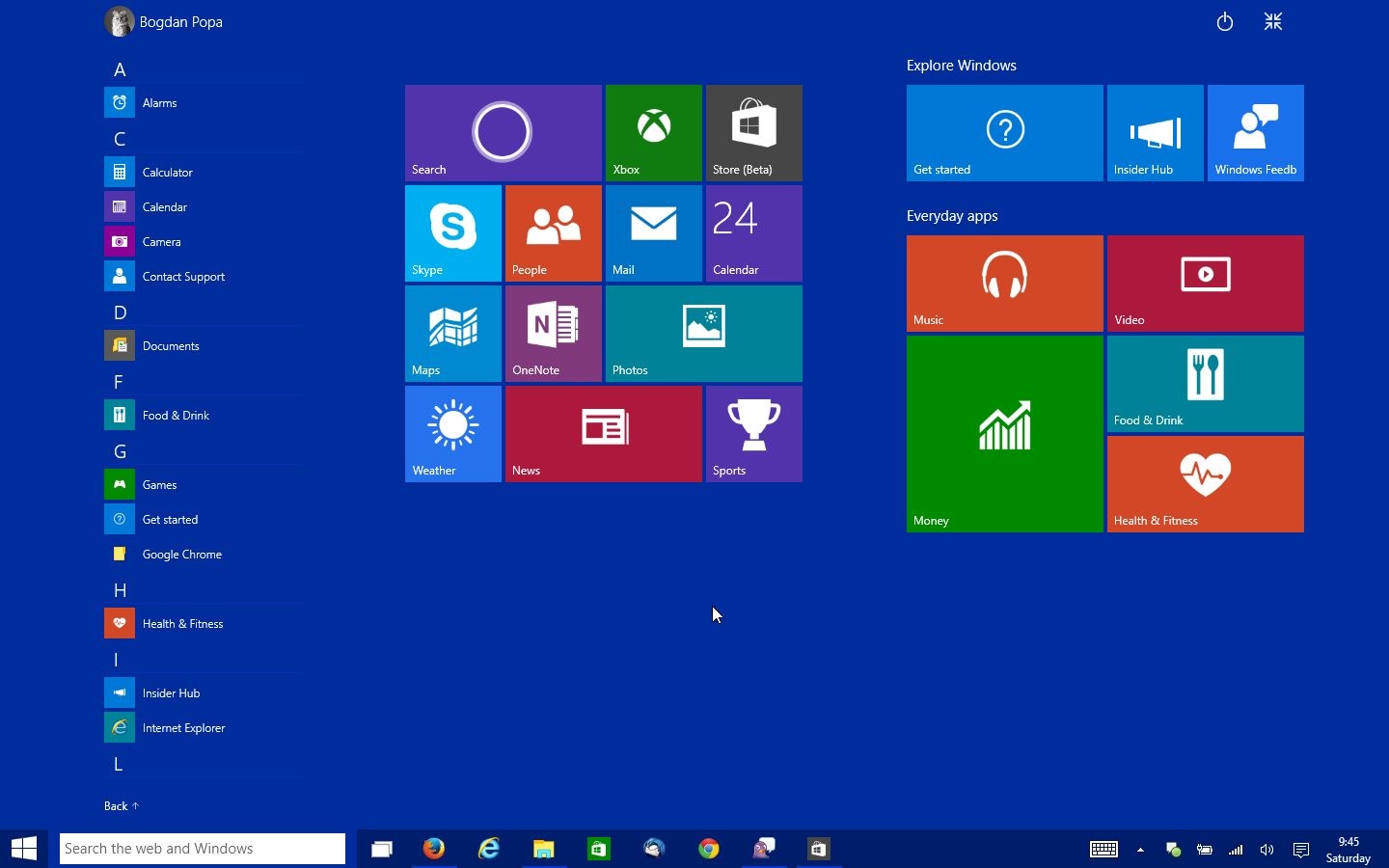
In Windows 10 S mode, you'll find the familiar Windows start menu, have Cortana as your digital assistant with speech recognition and you can download your Windows apps in the Windows Store in all versions. Digital drawing with Windows Ink and using face recognition to log in via Windows Hello is possible with 10 S, Home and Pro, provided your laptop supports this. OneDrive lets you back up and sync the Desktop, Documents, and Photos user folders automatically. You still can't designateanyfolder on the system for backup, as you can with Google Drive or SugarSync, but those folders contain most of what people want to protect. OneDrive's new Personal Vault feature rolled out to all users in October 2019.

It uses strong encryption to safeguard your most sensitive files. Windows 10 presents almost no learning curve for longtime Windows users, while managing to incorporate many of the advances of Windows 8—faster startup, tablet capability, better notifications, and an app store. Its windowing prowess remains unmatched, letting you easily show the desktop and snap windows to the sides and corner quadrants of the screen.
Windows 10 has become the most popular operating system for desktop computers, with more than 1.3 billion active PCs running it. Despite focusing on the new Windows 11 release—now rolling out—Microsoft continues to support Windows 10 with servicing updates. The OS continues to offer unique capabilities like touch input, a voice-based virtual assistant, face login, Windows Defender security, and mixed reality tools. Still-important but more mundane features include an improved screenshot tool, better window arrangement, and unified notifications.

The OS has reached a point of polish and functionality to earn it a PCMag Editors' Choice award. Windows 10 in S mode is a version of Windows 10 that's streamlined for security and performance, while providing a familiar Windows experience. To increase security, it allows only apps from the Microsoft Store, and requires Microsoft Edge for safe browsing. Windows 10 S Mode is a configuration that is designed to give you faster boot times, longer battery life, and better security. However, with Windows 10 S, you can't use certain web browsers or download any apps that are not in the Microsoft Store. To increase security and performance, Windows 10 in S mode runs only apps from the Microsoft Store.
If you want to install an app that isn't available in the Microsoft Store, you'll need to permanently switch out of S mode. There's no charge to switch out of S mode, but you won't be able to turn it back on. In Windows 11 Home, Microsoft mandates you to use a Microsoft account for login. This can be removed once you set up the PC and add a secondary account, but it will be required the first time you boot up the system. Using a Microsoft account gets you a lot of extra experiences like cross-device sync, the ability to download apps from the store, and more.

Check out our Windows 11 hands-on if you're interested in trying out the new operating system. The professional version of Windows 10 includes many extra features designed for businesses. It has virtually everything offered by Windows Home, plus additional security and management services.